
The Inquisition
Recurring patterns from some of history's most effective purges.
Key Points:
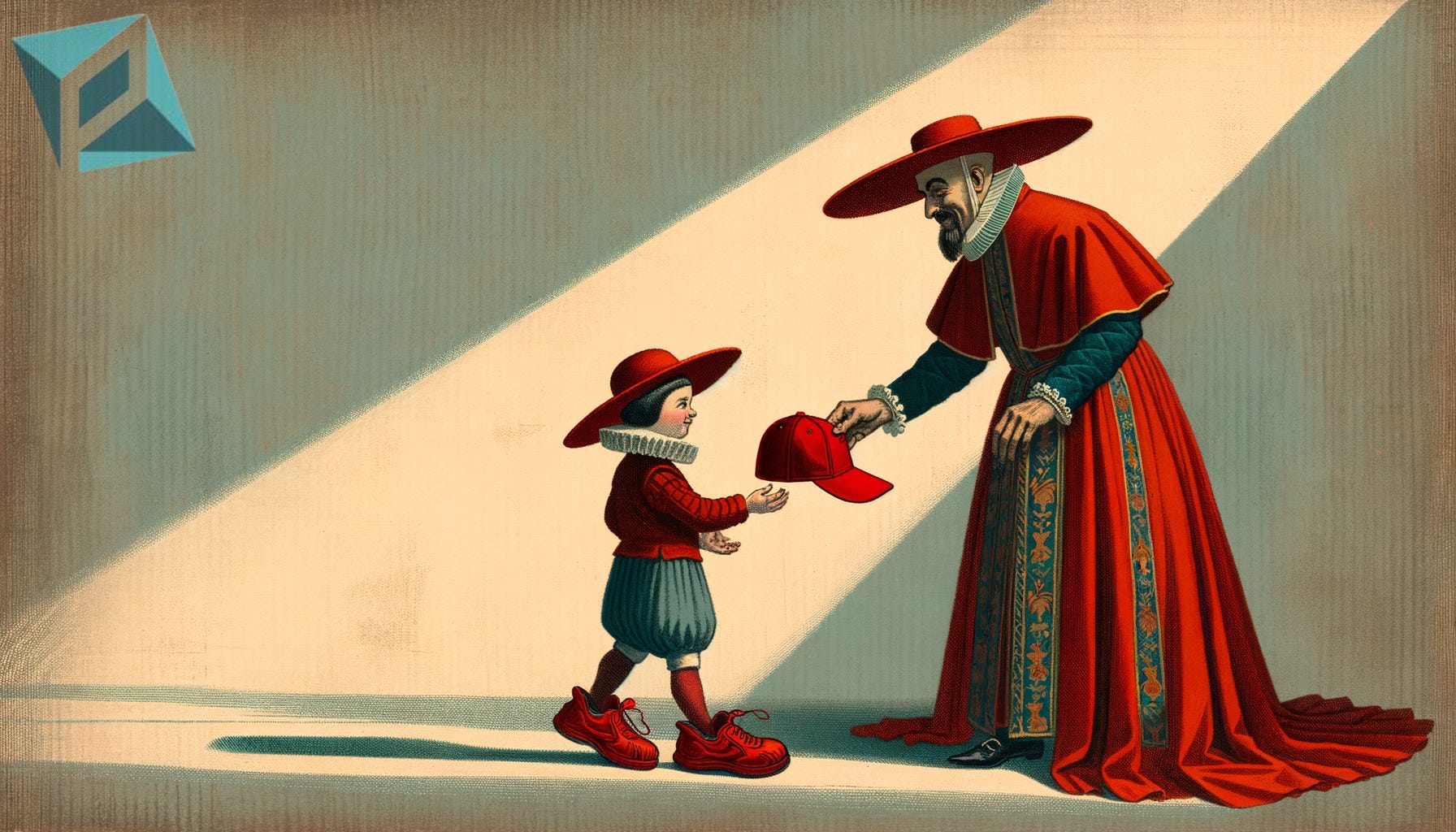
Purges may erupt unexpectedly but rapidly normalise. From the Spanish Inquisition to the Taliban, they have employed similar methodologies to eliminate enemies and enforce conformity.
All effective purges create new vocabularies that dehumanise targets and euphemise violence. This linguistic engineering allows ordinary people to participate in extraordinary cruelty while maintaining their self-conception as heroic individuals serving higher causes.
The most enduring legacy of systematic purges is the lack of trust even between neighbours, weaponising relationships and transforming ordinary spaces into theatres of terror.
Monty Python's Palin immortalised the phrase "No one expects the Spanish Inquisition," capturing something profound about systematic purges: they begin unexpectedly, then rapidly normalise.
From the comfy chair of history, it is striking to see that history's most effective purges employed strikingly similar methodologies to eliminate enemies, enforce ideological conformity, and consolidate power. These historical episodes aren't just interesting parallels; they reveal a universal grammar of elimination that recurs whenever purification takes precedence over pluralism.
And Now for Something Completely anti-Dissident
Purges require new vocabularies that simultaneously dehumanise targets and euphemise violence. The French Revolution excelled at this linguistic transformation, creating an entirely new political lexicon where execution became "republican baptism" and the guillotine was the "national razor." This revolutionary government even introduced a new calendar, renaming months and eliminating religious references to create a completely new temporal framework that reinforced its ideological narrative.
The Spanish Inquisition and Cultural Revolution similarly employed specialised terminology that created psychological distance between actions and their moral implications. Inquisitors described torture as "questioning" and execution as "reconciliation," while Red Guards labelled intellectuals "stinking ninth categories" (臭老九) and called execution "sending to meet Marx" (去见马克思). These linguistic innovations made atrocity discussable by recasting it in ideological terms.
The Nazis perfected bureaucratic euphemism with terms like "special treatment" (Sonderbehandlung) for extermination and "final solution" (Endlösung) for genocide. The Rwandan genocide introduced "cutting down tall trees" for killing Tutsis, while Bosnian Serbs used "cleansing" to describe ethnic removal. Soviet officials spoke of "liquidation" rather than murder, and the Cambodian Khmer Rouge used the sterile phrase "to crush" for execution.
Modern regimes continue this tradition. Argentina's military junta referred to kidnapped victims as "the disappeared" (los desaparecidos), implying mysterious vanishing rather than state murder. American officials renamed torture as "enhanced interrogation," and Israeli military operations use "targeted elimination" rather than assassination. In Sri Lanka recently, I was reminded that the final offensive against Tamil rebels as a "humanitarian operation."
By controlling language, these systems controlled the moral framework for evaluating actions. This linguistic engineering allowed ordinary people to participate in extraordinary cruelty while maintaining their self-conception as good, even heroic, individuals serving higher causes rather than committing atrocities.
Semantic antics
Purges may begin with narrow targets but inevitably expand their definitions of enemies. The French Terror provides a clear example of this pattern, beginning with aristocrats before consuming the revolution's own architects in waves; first the Girondins (moderate revolutionaries), then the Hébertists (ultra-revolutionaries), then the Dantonists (pragmatic revolutionaries), and eventually anyone expressing insufficient revolutionary enthusiasm. As Danton himself reportedly said before his execution: "The revolution, like Saturn, devours its own children."
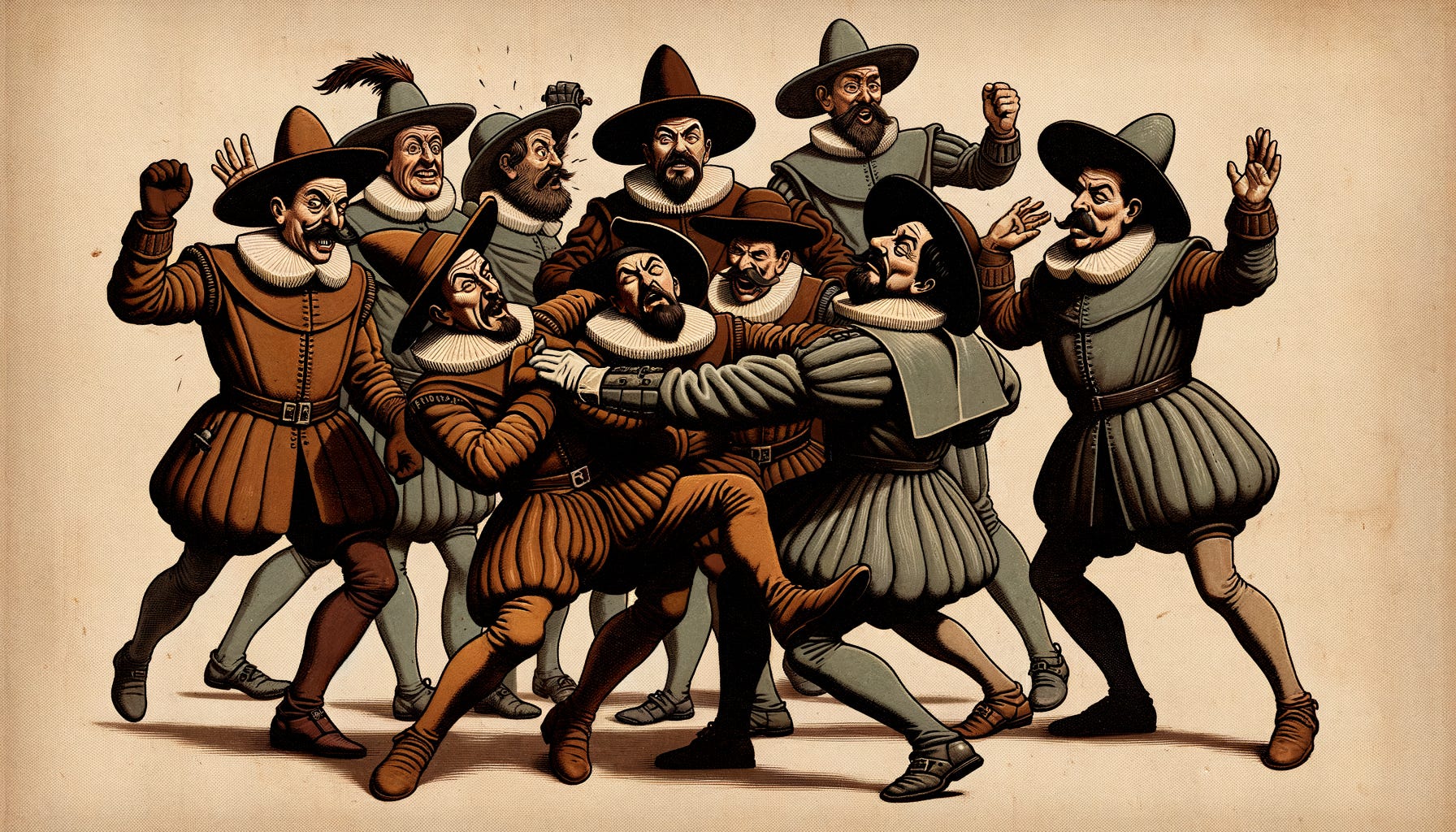
This expansionary logic appears across purges. The Spanish Inquisition initially targeted only Jewish converts suspected of secretly practising Judaism before expanding to converted Muslims, then Protestants, then mystics, then witches, and eventually anyone exhibiting behaviour that might indicate unorthodox beliefs. The Cultural Revolution similarly began with "rightists" within the Communist Party before encompassing intellectuals, teachers, professionals, and eventually anyone with pre-revolutionary education. So too Pol Pot's Khmer Rouge. (I wrote a few months ago in The Summer of Loathe a little more on this if interested.)
Stalin's purges demonstrated this expansion with particular clarity. Beginning with Lenin's former allies, the purges expanded to encompass "saboteurs," then "wreckers," then "cosmopolitans," then doctors, and eventually whole ethnic groups deemed inherently suspicious. McCarthy's anti-Communist investigations in 1950s America followed a similar pattern, beginning with State Department employees, before expanding to Hollywood, academia, and eventually even the Army.
Pol Pot's Khmer Rouge initially targeted the urban educated class, but gradually expanded the category of enemies to include anyone with soft hands, anyone wearing glasses (suggesting literacy), and eventually people from certain regions or with certain accents. This expansion wasn't accidental but reflected the inherent logic of purification systems—when the promised utopia fails to materialise after initial eliminations, hidden enemies must be discovered and removed.
What drives this expansion is the fundamental promise underlying all purges: that eliminating a specific enemy group will create a purified society. When this promised utopia fails to materialise after the initial eliminations, the logical conclusion is that hidden enemies must still be undermining the project, requiring expanded definitions and renewed vigilance.
This pattern reveals the inherent instability of purification projects. What begins as the targeted elimination of clear opponents inevitably expands until the society reaches a state where anyone might potentially be accused.
The “They”
Insidiously, these purges also establish categories of people who can never fully prove their loyalty. In Spain, Jewish conversos remained suspect regardless of sincere Christian practice; in China, those from "landlord backgrounds" faced permanent discrimination despite revolutionary enthusiasm. These untouchable categories serve a crucial function: they create permanent reservoirs of potential enemies who can be targeted whenever the system requires new victims. The Revolutionary Tribunal in France explicitly recognised that aristocratic birth constituted permanent contamination, with Saint-Just declaring that "those born in the grave of liberty" could never truly be revolutionaries.
Stalin's purges institutionalised untouchable categories through concepts like "social alien" and "former people"—designations applied to those with pre-revolutionary elite status, religious backgrounds, or foreign connections. The Iranian Revolution similarly created the category of "Westoxified" individuals who, regardless of their Islamic practice, and the Khmer Rouge created classes who remain permanently suspect due to education, religion or cultural inclinations.
By creating permanent suspect classes, purge systems ensure their own sustainability. When new enemies are needed, these pre-defined categories provide ready targets who can never fully clear themselves of suspicion, regardless of their actual beliefs or behaviours.
The Infrastructure of Surveillance
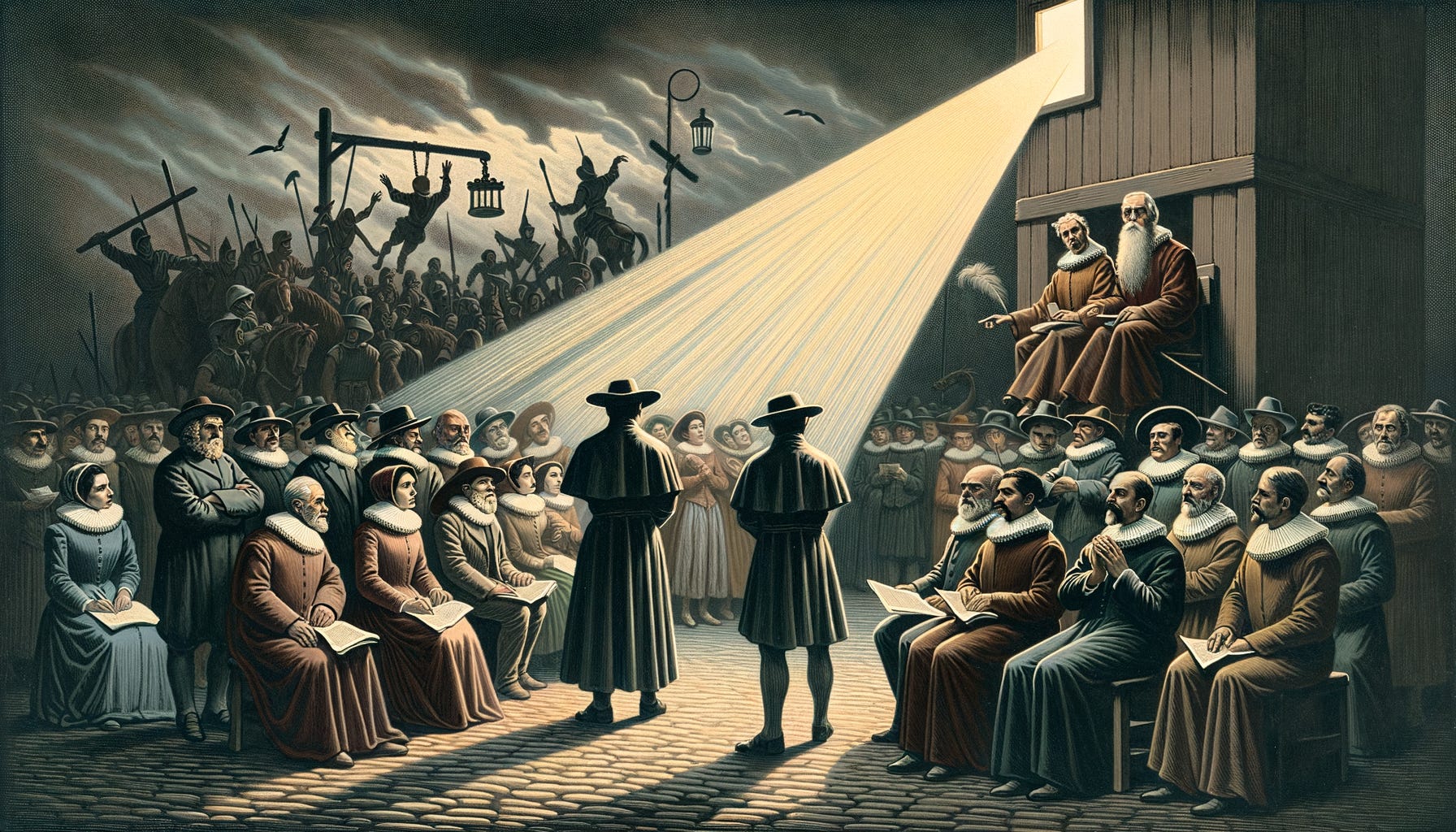
The most effective purges create omnipresent surveillance systems where citizens monitor one another. The Spanish Inquisition's network of informants operated with guaranteed anonymity; transforming neighbourhoods into webs of suspicion could trigger investigations. This same principle animated Mao's neighbourhood committees and Robespierre's Revolutionary Sections. McCarthyism in America similarly created infrastructure for monitoring "un-American activities", Pinochet developed specialised intelligence units focused on infiltrating civilian organisations, creating surveillance networks that persisted even after transitions to democracy.
The Soviet KGB developed perhaps history's most comprehensive surveillance apparatus, combining human informants with technical monitoring capabilities that covered virtually all aspects of social and private life.
The records created during these periods, from the Inquisition's detailed genealogies, the Cultural Revolution's personal dossiers, continue affecting lives for generations, creating what historian Robert Darnton calls "the long shadow of the past" that shapes social relationships long after active persecution ends.
Modern digital surveillance states represent the technological evolution of these historical systems (see Stasi Media). They employ similar principles of ubiquitous monitoring, and the infrastructure developed for counter-terrorism and social media monitoring creates capabilities that could quickly be repurposed for systematic elimination if political circumstances changed.
Controlling Knowledge
Elimination systems extend beyond targeting people to attacking knowledge systems that might provide alternative frameworks for understanding society. The Cultural Revolution's campaign against the "Four Olds" (old ideas, culture, customs, and habits) represents one attempt to erase competing knowledge. Red Guards destroyed temples, burned books, and smashed cultural artifacts in a systematic attempt to eliminate pre-revolutionary knowledge systems that might compete with Maoist thought.
The Inquisition's Index of Prohibited Books and the French Revolutionary government's closure of the Academy of Sciences similarly aimed to control which ideas could circulate. By eliminating texts containing unapproved ideas, these regimes ensured that their orthodoxy faced no intellectual competition from alternative viewpoints. Even Sulla understood the importance of controlling historical narrative, ordering the destruction of writings glorifying his opponents.
This selective erasure of historical memory ensured that future generations would encounter a version of history that justified his actions rather than condemned them.
The Taliban's destruction of cultural heritage, including the Bamiyan Buddhas and countless artifacts in the National Museum of Afghanistan, demonstrates the continuing importance of eliminating alternative knowledge systems. By destroying physical evidence of Afghanistan's pre-Islamic past, they attempted to create an environment where their version of history and religion appeared inevitable rather than one tradition among many. ISIS similarly destroyed archaeological sites, manuscripts, and cultural artifacts throughout Syria and Iraq, specifically targeting evidence of religious pluralism and pre-Islamic civilisations. A contemporary example is Musk's manipulation of Grok
These attacks on knowledge reveal that effective elimination systems target not just current opponents but the very possibility of alternative thinking. By destroying repositories of competing ideas and controlling educational institutions, they attempt to create environments where their ideological framework becomes the only conceivable way of understanding the world.
Understanding the Pattern
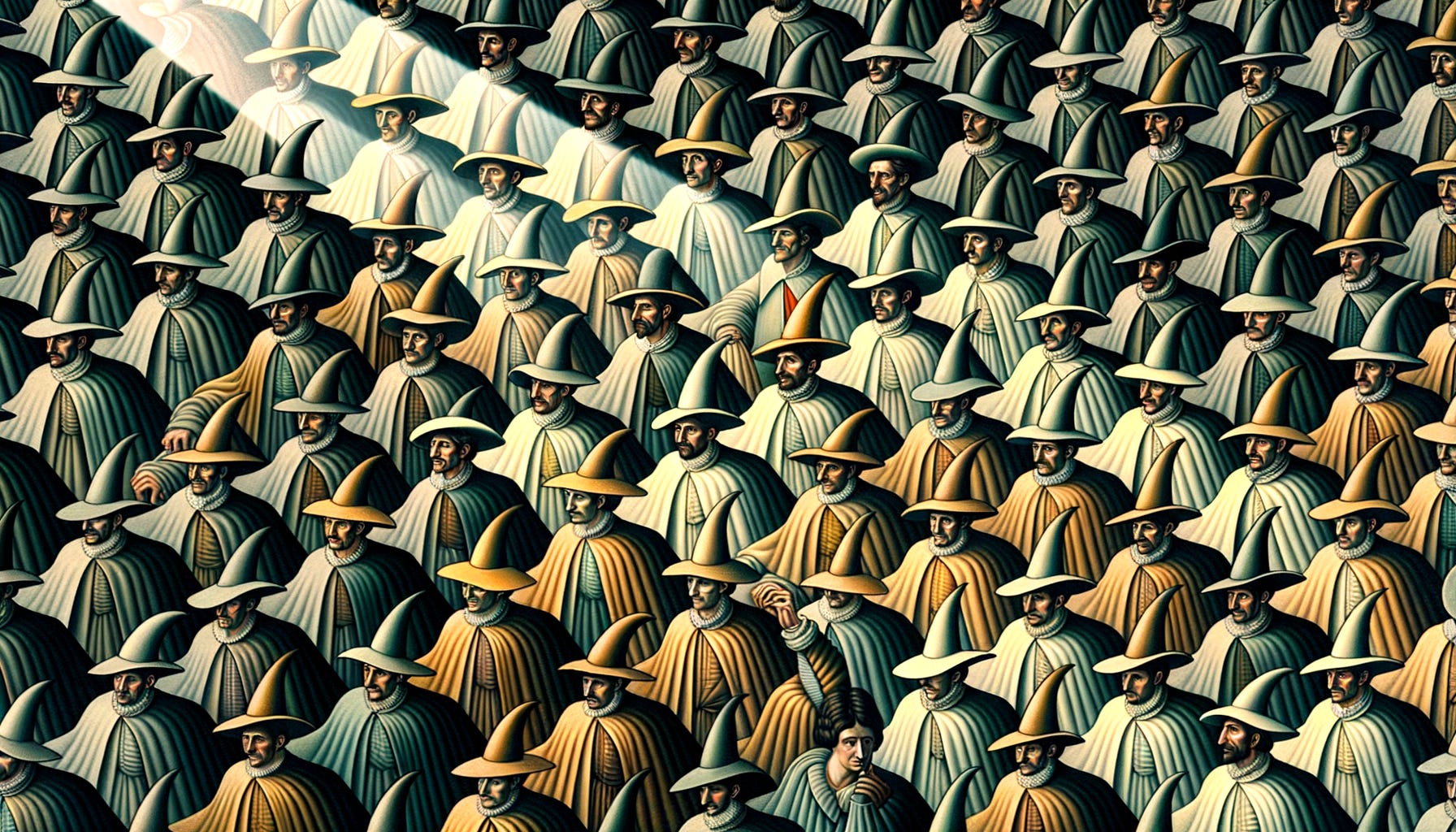
These historical parallels recur across vastly different contexts, suggesting they reflect fundamentals of unconstrained power. Hannah Arendt observed that purges follow predictable trajectories regardless of ideology. Enemies initially identified by actions are later targeted by identity alone, with biological characteristics eventually determining one's fate.
Modern manifestations include digital surveillance, algorithmic classification, euphemistic language, and expanding suspect categories-all with historical antecedents. The Spanish Inquisition, Cultural Revolution, and French Terror represent recurring patterns in how societies eliminate internal enemies when purification trumps pluralism. By recognising these patterns early, we gain our best defence against their destructive potential.
Further Reading (and viewing):
The Origins of Totalitarianism - Hannah Arendt's seminal analysis of how persecution systems develop and function across ideological lines.
Ordinary Men - Christopher Browning's examination of how average citizens become participants in atrocity.
The Great Terror - Robert Conquest's definitive account of Stalin's purges and their social mechanisms.
Language and Power - Norman Fairclough's exploration of how linguistic frameworks enable political violence.
Monty Python’s Flying Circus - Because sometimes absurdist comedy is mandatory